
Division 293 Tax Explained
18 October 2015
The Labour Government’s 2013 Federal Budget aimed to make taxation on Superannuation “fairer” by targeting very high income earners to reduce their tax concessions for super contributions.
After 1 July 2012 individuals became liable to pay Division 293 Tax of an additional 15% if their income and super contribution combined was greater than $300,000.
Prior to this time, an individual paying the highest marginal tax rate of 45% on their annual income received a concession of 30% - as they only paid 15% tax on their low-tax (generally employer) superannuation contributions. However, with the introduction of Division 293, an individual with income of at least $300,000 will now be taxed at 30% on low-tax contributions to a complying superannuation fund effectively reducing their tax concession to 15%.
Does Division 293 Apply to You?
To assess whether you are liable to Division 293 Tax, the ATO uses information from your income tax return and low-tax contributions reported by your superannuation fund. However, an assessment will generally not be issued until both pieces of information have been received by the ATO. This can take weeks even months after lodgement of your income tax return to be raised.
Below is a list of all items considered as income for surcharge purposes:
- Taxable income (assessable income less any deductions)
- Employer and personal superannuation contribution amounts
- Total reportable fringe benefit amounts
- Net financial investment loss
- Net rental investment loss
- Amounts on which family trust distributions tax have been paid
- Super lump sum tax elements with zero tax rate
Example 1:
For the 2014-2015 income year, Joe Footballer reported the following amounts on his Income Tax Return;
- Taxable income per his tax return of $290,000
- Total Reportable Fringe Benefits of $10,000
- Net amount on which family trust distribution tax has been paid of $15,000
- Low-tax (employer) contributions of $25,000
Therefore, Joe’s income for Division 293 purposes is $340,000, being the sum of the above amounts. As Joe’s income exceeds the $300,000 threshold, he will be assessed for Division 293 Tax.
In order to calculate the Division 293 tax, we must first determine the taxable amount, being the lesser of:
- Income for Division 293 purposes less the threshold of $300,000, or
- Low tax contributions
Therefore the calculation of his tax assessment is as follows;
- Income for Division 293 purposes ($340,000 ) less the threshold of $300,000 = $40,000, or
- Low tax contributions = $25,000
Accordingly, Joe’s assessable amount for the 2014-15 year is $25,000 because it is the lesser of the two amounts.
Assessed Division 293 Tax
= $25,000 x 15% = $3,750
This amount of $3,750 is required to be paid to the Australian Taxation Office
How is it paid?
Payment of Division 293 Tax is generally due 21 days from the date of the assessment notice. Individuals can choose to have their superannuation fund pay the tax or they can pay it out of their own pocket. Contributions attributed to a defined benefit superannuation fund are eligible to defer tax and will not need to be paid until the benefit end of the defined superannuation interest becomes payable. Your notice of assessment will state whether this option applies to you and will we need to inform the ATO if you have requested this option.
Can you reduce your income?
If you are over the $300,000 threshold and have other income such as third party or endorsement income, you should be seeking is advice to ensure the appropriate structures are in place to divert any endorsement or third party income to other low income family members, thereby reducing your personal tax burden.
If you are approaching the $300,000 income mark, you should be seeking advice on how to structure your income without delay.
New Developments
On 5 October 2015, a statement was issued under the CFA-Mercer report, which recommended the $300,000 threshold be reduced to $180,000. We will continue to analyse the outcome and advise if any of these recommendations are adopted.
For an update on this issue and to seek advice on your circumstances, please contact us on 1300 204 781.
Latest News

Geelong Home Loans team receive great 5 star review!

AML/CTF Compliance Notice - M Group

When it comes to financial planning, one of the most powerful, and often overlooked concepts is the relationship between human capital and physical (investment) capital.
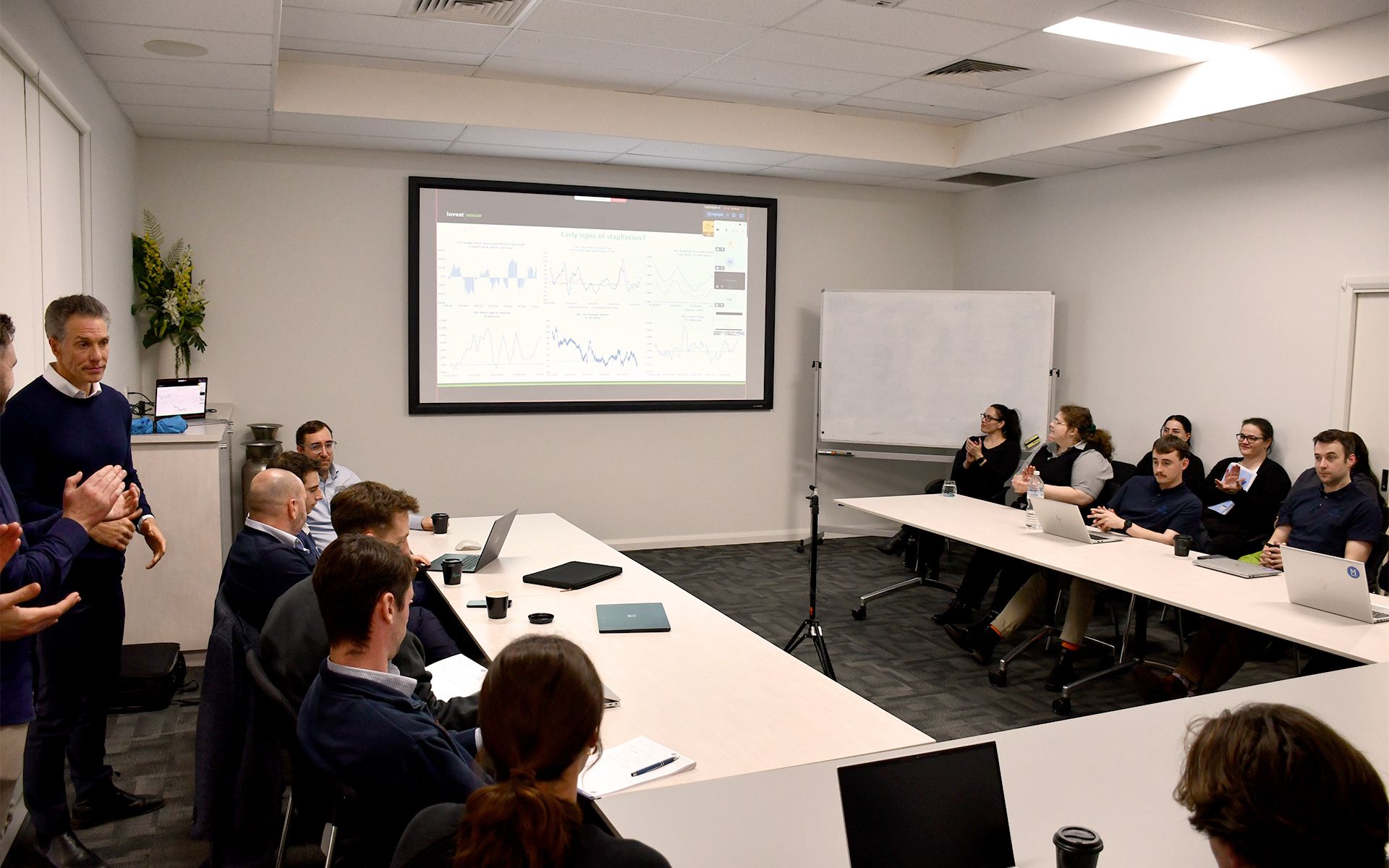
Did you know our Financial Planning division engage a research partner to assist their advisors in keeping up to date with the latest information in local and international economics? The partner is InvestSense and Jonathan Tolub from InvestSense attended the recent Investment Committee Meeting held in the Ballarat office. Our Marketing division filmed and edited the 16 minute presentation and you can watch it below. To talk to one of our Financial Planners about the Share Market, contact us here.