
Starting From Scratch - Week 1: Where Do I Start, and What Does It All Mean? Watch the video on this page or listen to the podcast on our website, on Spotify or on Apple Podcasts. If you’ve ever opened an investing app, stared at thousands of shares, and quietly closed it again, you’re in good company. Between the thousands of shares, hundreds of ETFs, managed funds & investment property options, there’s also a never-ending stream of people on TikTok and Instagram who’ve apparently found the next big thing. It’s no surprise a lot of people end up doing nothing. They don’t lack motivation; they just don’t know where to start. That is why we are building the Starting from Scratch series. Over the next ten weeks we’ll aim to build your knowledge on investing up from the ground floor, so by the end, you understand what you’re doing and why, and the knowledge you have gained can hopefully assist with making smart financial decisions for your future. First, the main ways to invest. There are plenty of ways to invest in shares, and each option has a different outcome. Here are three of the most common. Direct shares: Owning a piece of one company. When you buy direct shares, you own a small slice of a single company. Buy shares in Commonwealth Bank and you’re a part owner of CBA. Abiet a small part but still enough to mention at the next barbecue. You can make money from shares in two ways: The share price goes up over time (growth). The company pays you a share of its profits, usually once or twice a year (dividends). Not every company pays them. The appeal of direct shares is that you can follow the companies you own. You can look at how a business makes money, what it’s up against, and decide whether you like it. The catch is concentration risk. If you only own one company, your whole result rides on how that one business goes. Say you own only CBA and the banks have a rough year. Everything you’ve invested takes the hit. Owning a few companies helps, but if they’re all in the same industry, it’s still a lot of eggs in one basket. Even big, well-known names go through rough patches, and choosing well takes research and time. Some people enjoy that. Others would rather not spend their Sunday reading annual reports. Exchanged Traded Funds - ETFs: A more Diversified Approach. ETF stands for exchange traded fund. The best analogy is a basket that holds lots of direct shares & investments at once, and you buy a slice of the whole basket in one go. It trades on the share market just like a normal share. Rather than picking one company, a single ETF can give you exposure to dozens, hundreds or even thousands of direct equities. For example: An Australian shares ETF might hold the top 200 biggest companies in Australia, in one single ETF. A global shares ETF might spread your money across companies in the US, Europe and Asia. A diversified ETF might mix shares from all over the world and diversify for you. ETF’s have quickly become the most popular way individuals invest in the stock market. They are simple, spread your risk, and often cost less than other options. Managed funds: Paying a professional to manage the funds. A managed fund pools money from lots of investors, and a professional fund manager decides what to buy and sell based on the fund’s goal. The individual fund manager may be targeting a range of different outcomes, like beating a certain benchmark, offering an active approach to an otherwise passive market etc. Funds can hold Australian and international shares, property, fixed interest and more. The trade-off is that someone with investment expertise is making the decisions for you that are in-line with the overall fund’s objectives, and that comes at a higher cost than a passive approach such as building out a passive ETF portfolio on your own. We’ll dig into fees in later in the series. because they matter more than most people realise. Before you invest your first dollar. A few questions come before any product or specific share purchase: What is this money for, and when will you need it? Investment timeframes matter most before making your first investment. Do you have a cash buffer for the unexpected stuff, so you’re not forced to sell investments at a bad time? Are you already investing through super? For most Australians it’s their first and biggest investment, and we’ll come back to this in a later episode. Your answers shape everything else, which is why we’ll keep returning to them over the series. Jargon buster: Shares: Your part-ownership or slice of ownership in a publicly listed company. Dividend: a payment from a company’s profits to its shareholders (you if you hold shares in that company). ETF: a group of shares & investments you can buy in one go on the share market. Managed fund: a pool of money run by a professional manager. Diversification: not putting all your eggs in one basket. Homework for the Week: Write down what you’re investing for and roughly when you’ll need the money. A couple of lines is plenty. It’ll make next week’s episode on risk and return a lot easier to apply to your own situation. Tune into our next show: Asset Allocation and Risk vs Return
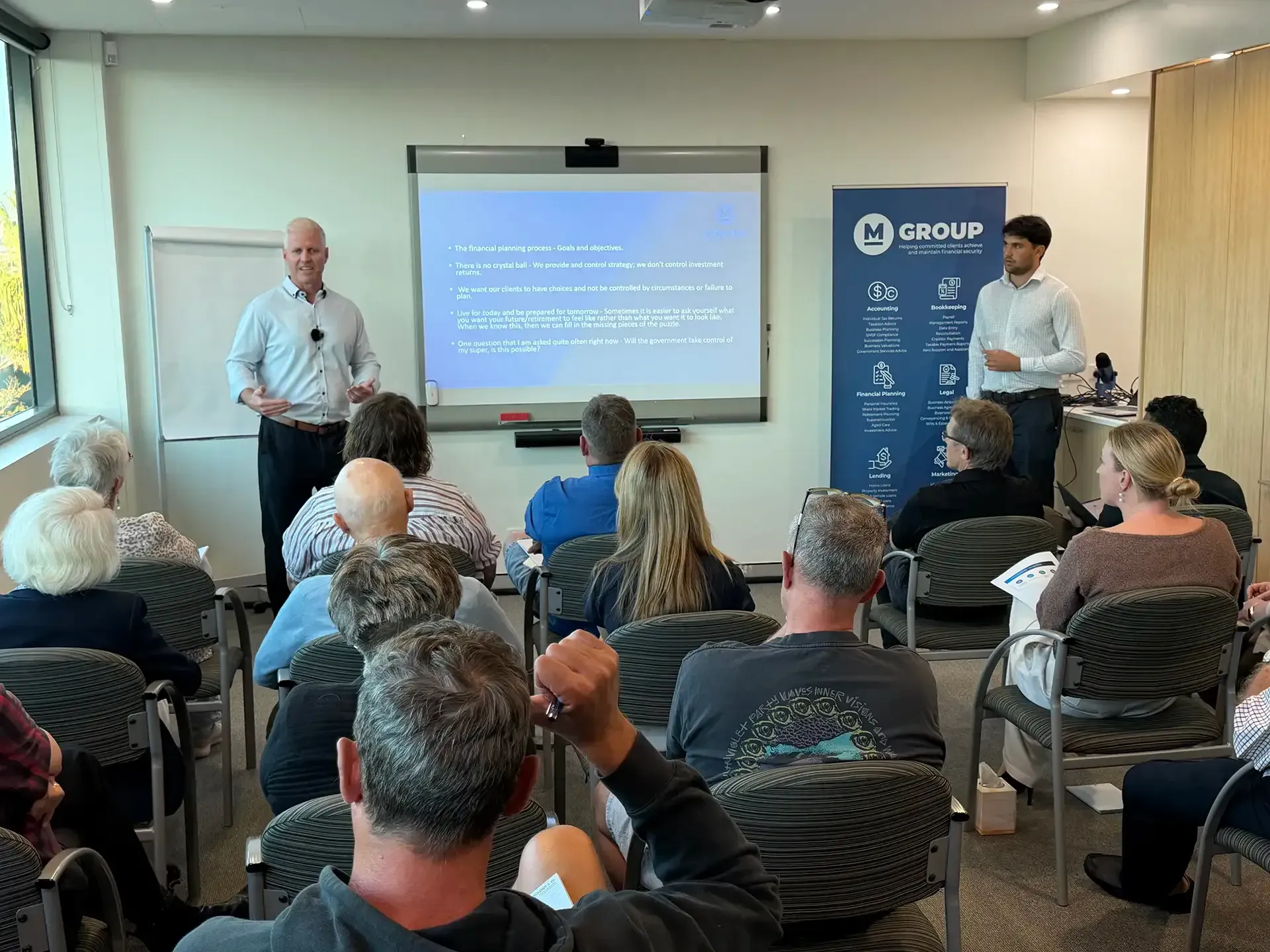
This seminar was held in the M Group Sunshine Coast office on October 1st 2026. We welcomed clients into the room and now here on YouTube to listen to Financial Planners Kym Vivien and Jack Toohey speak, along with Accounting Director Jodie Thompson and our special guest Jonathon Tolub from our Share Market research partner Investsense. ----------------- Trends Shaping Your Wealth + Federal Budget Key Insights. We will be joined by InvestSense, M Group’s dedicated investment research partner, who provide independent research and insights into investment markets and assist with the construction and management of client portfolios. Our seminars aim to be informative and insightful for our valued clients. You can watch the entire seminar here:

Geelong Home Loans team receive great 5 star review!