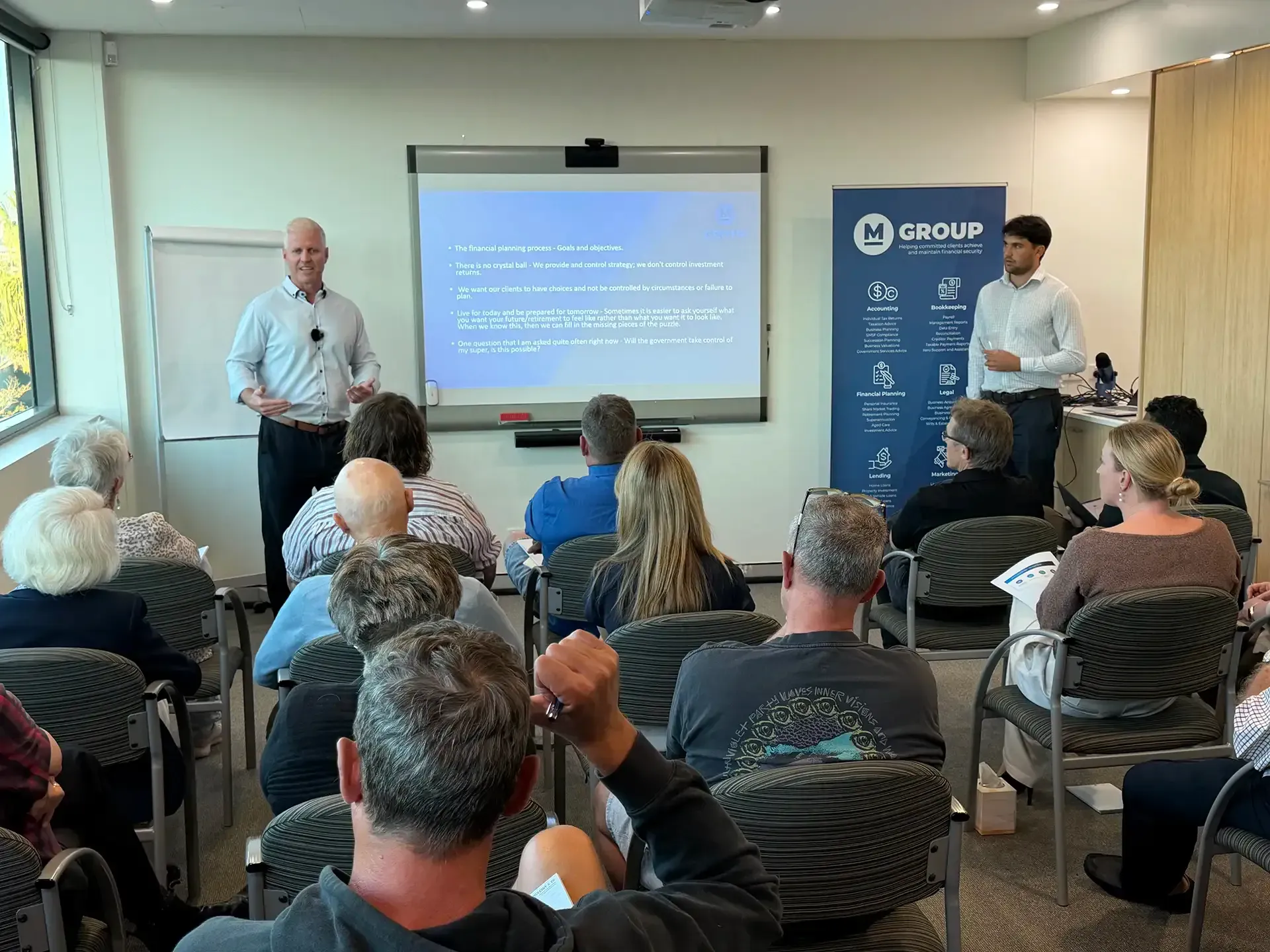
Episode 68 FS360 Podcast - Victoria's Commercial and Industrial Property Tax Reform
Episode 68
Victoria's 'Commercial and Industrial Property Tax Reform' and how this will affect Stamp Duty for these properties is discussed with Principal Solicitor Brad Matthews and host Gavin Nash. Changes are coming on July 1st 2024 in this area and Brad gives us great insight into how and what is changing - and when!
Also available on Spotify, Apple & Google Podcasts.
As of July 1 2024, the Victorian Government brought in a commercial and industrial property tax reform, “abolishing” stamp duty for commercial and industrial property owners.
Speaking on the FS360 Podcast with Gavin Nash, Mulcahy & Co principle solicitor Brad Matthews outlined what that means for commercial and industrial property owners moving forward.
“The Victorian Government announced this as an abolishing of stamp duty on commercial and industrial property,” Matthews said.
“People out there are thinking that if they sign a contract after the 1st of July there’s no stamp duty on commercial or industrial land. That’s not the case.
“If you enter into a contract on the 2nd of July, which settles on the 1st of September … there’ll be one last hurrah of stamp duty for that property.
“A 10-year period then starts before that property owner is subject to paying the tax on that. There’ll be one last final bit of stamp duty on all commercial and industrial properties and then it’ll be in the system.”
The government has introduced a loan scheme to pay that last lump of stamp duty over a 10-year period too, with interest to be applied at market rates.
Once that property’s 10-year period is up, the owner is subject to a 1% tax on the unimproved land value going forward each year.
While other taxes such as vacant residential property tax are calculated on the land’s capital improved value, this reform will only tax commercial and industrial property owners on the unimproved value.
“During that 10-year period, you can transact that property as many times as you like without stamp duty again,” Matthews said.
Property owners should be careful they don’t start the 10-year clock unknowingly, Matthews touching on two examples of where that can happen.
“Let’s say I own 100% of a commercial or industrial property in a company and I say ‘I want you to buy into the business and the freehold as well’,” Matthews said.
“I’m not selling you half of the title in that particular instance, but I may be selling you 50% or more of the shares in the company that owns the land.
“Certain types of sub-divisions or consolidations can also be considered a transaction, which will start the 10-year clock.
“Things that are exempt from stamp duty that won’t trigger the reform currently are deceased estates, transfers between spouses and things like that.”
Areas where clarification is needed are mixed use properties and change in use properties.
The former are those that include a mix of residential and commercial or industrial use. These properties will have to undergo a sole or primary use test to figure out what the percentage of residential and commercial use is at that particular property.
The latter is different, where somebody buys a property for one use, however decides to change that use down the line.
“Let’s say you have a property, you brought it as a commercial or industrial factory, used it for your business for a few years, then you realise I could redevelop this property into residential apartments,” Matthews said.
“If you convert a property to a non-qualifying use … and the property continues to be used for that use i.e residential, the person won’t be liable for the commercial and industrial property tax going forward, that 1% won’t start, or if it had already started, it wouldn’t continue.
“If they sold the property while it was a non-qualifying use, then stamp duty would be payable as if it was a residential property."
Latest News